Responding to Urgency
How Grifols Built a Legacy of Blood Safety
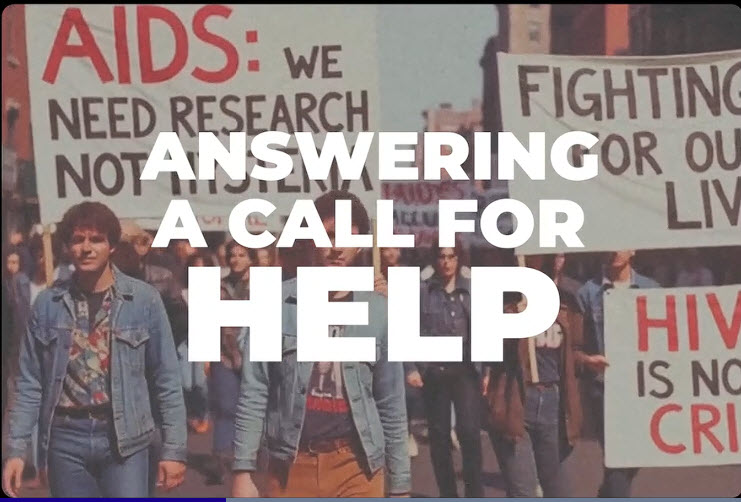
In the early 1980s, a global blood safety crisis demanded immediate and decisive action. Evidence emerging in the United States showed that acquired immunodeficiency syndrome (AIDS) could be transmitted through blood transfusions, raising profound concerns about the safety of the blood supply and the protection of patients worldwide [Curran et al., 1984].
In response, governments and health authorities turned to the medical and scientific community—not only to innovate, but to act with speed, responsibility, and purpose. This moment was not simply about developing a new assay; it was about answering an urgent call to protect lives.
For Grifols, that call became a defining moment.
Answering the Call
Early NAT assays focused on viruses, such as HIV 1 and HCV, and were performed on semi automated systems. As technology advanced, screening evolved into fully automated, high throughput multiplex platforms capable of detecting multiple pathogens and diverse viral variants in a single assay.
At the same time, testing strategies varied from large mini pool (MP) formats to smaller pools and, ultimately, to individual NAT testing (ID-NAT). These advances significantly shortened the window period and improved detection of early stage infections.
From the first NAT assays to multiplex testing, semi automation and full automation Grifols consistently raised the bar for blood safety. Maintaining the safety of the blood supply in the face of emerging threats is an ongoing challenge requiring close collaboration among transfusion medicine researchers and industry. Grifols has risen to this challenge with its continuous innovation in NAT screening technologies and systems.
Breakthroughs that Changed the Industry
Early NAT assays targeting HIV-1 and HCV were performed on semi-automated testing systems. Technologysoon progressed to multiplex screening systems capable of detecting nucleic acid sequences from diverse variants of HIV-1/2, HCV, and HBV on automated, high-throughput platforms. Initial testing of large mini-pool (MP) formats
to smaller pools and, ultimately, to individual NAT testing (ID-NAT).
From the first NAT assays to multiplex testing, including the first fully automated NAT instrument. Grifols has responded to the challenge of helping to ensure a safe blood supply with its continuous innovation in NAT screening technologies and systems.
A Legacy That Lives On
By 2010, approximately 30 countries had implemented or were planning to implement NAT screening for HIV 1/2, HCV, and HBV. Adoption continued to accelerate over the following decade, reflecting the growing recognition of NAT as a cornerstone of modern blood safety systems.
In 2019 alone, an estimated 28 million blood donations were screened for HIV, HCV, and HBV; 6.5 million for West Nile virus (WNV); 3.2 million for hepatitis E virus (HEV); and 5.9 million for Zika virus. Since the introduction of NAT, more than 22,000 donations worldwide have been identified as NAT yield infections—cases detected during the window phase or as occult infections that would not have been identified by serological testing alone [Faddy et al., 2024].
These numbers represent more than progress in screening—they represent real people protected because of early detection and decisive action.
Continuing the Commitment
Today, millions of lives are safer because of the commitment born from that moment of urgency decades ago. Grifols’ approach—integrating rigorous testing, scientific innovation,—remains at the heart of blood safety worldwide.
And the mission continues. Because every advancement builds on a simple principle: when lives are at stake, urgency, science, and trust must work together.
Watch the full video series to learn how our legacy continues: The Past, Present and Future of NAT