Genotyping: More Than Confirmation or Rarity
Cracking the Code: Genotyping in Real Life
Genotyping isn’t just a futuristic add-on — it’s a practical tool for solving today’s transfusion challenges.
These blogs highlight how molecular insights support better outcomes for alloimmunized, complex, or high-risk patients.
Myth: Genotyping is only for rare cases or simply confirms serology — it’s redundant.
Phenotyping has long been a foundation of immunohematology. It’s accessible, fast, and cost-effective – but it isn’t always conclusive. Limitations arise with variant or weak antigen expression, recent transfusions, or interference by autoantibodies. That’s where genotyping becomes essential rather than optional.
Genotyping Offers Clarity that Serology Sometimes Cannot
Phenotyping has long been a foundation of immunohematology. It’s accessible, fast, and cost-effective – but it isn’t always conclusive. Limitations arise with variant or weak antigen expression, recent transfusions, or interference by autoantibodies. That’s where genotyping becomes essential rather than optional.
Genotyping examines the DNA that encodes several blood group antigens, offering clarity that serology sometimes cannot. It distinguishes partial vs. weak antigen variants (like RhD variants), clarifies ambiguous phenotype results, and is unaffected by transfused donor red cells or positive DATs. These advantages apply not just in exotic scenarios, but in routine clinical cases as well.
Why Does this matter?
Consider a pregnant patient labeled “RhD-positive.” Without genotyping, some partial D variants go undetected – potentially leading to a failure to administer RhIG and worse, a missed risk of alloimmunization. Similarly, in patients with unclear Kell or Duffy antigen status (perhaps due to recent transfusion or an inconclusive or weak phenotype), genotyping can provide a definitive answer – even when the patient’s own red cells are not available.
Molecular Genotyping
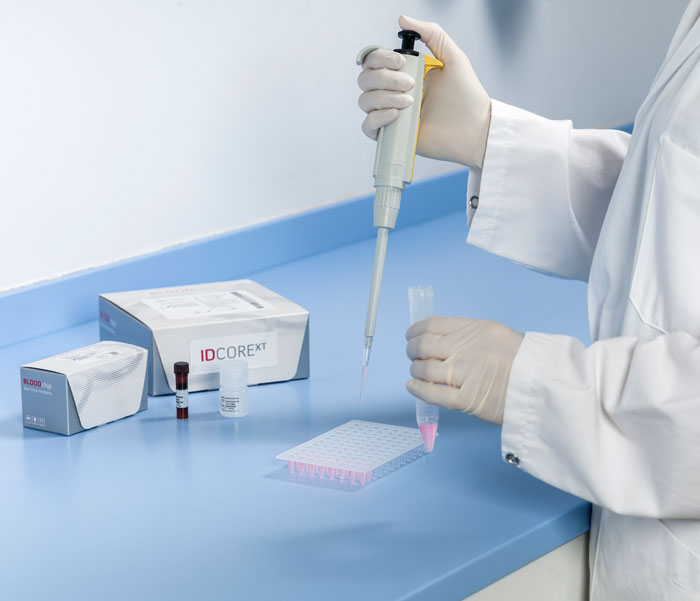
Genotyping is also transforming donor management. Blood group genotyping of donors can build a DNA-genotyped donor inventory that allows identification of both common and rare antigen-negative units, improves matching rates for alloimmunized patients, reduces new alloimmunization through antigen-matched transfusions, and makes inventory use more efficient. For example, the Grifols FDA and CE licensed ID CORE XT platform can simultaneously genotype for antigens in the Rh, Kell, Duffy, Kidd, MNS, Diego, Dombrock, Colton, Cartwright, and Lutheran systems (along with key antigens and variants), creating a detailed donor antigen profile.
The Bottom Line
The bottom line: genotyping is not a niche tool reserved for rare circumstances. It’s a cornerstone of precision transfusion medicine – one that extends the reach of the lab beyond what can be seen under the microscope. Far from merely confirming what we already know, genotyping often tells us something new and clinically important.
Authored by Dr. Laziza Amniai